In Pain? Emergency appointments welcome.


Natural-Looking Veneers in Timonium, MD


Many Timonium patients ask the same question before getting veneers: Will they look fake? It is one of the most common concerns we hear at West Towson Dental. The good news is that modern veneer technology has completely changed what is possible. Understanding why your new veneers won’t look fake or too white in Timonium starts with learning how today’s materials and techniques work together.
Dr. Michael W. Whitecar and his team take a personalized approach to every smile. No two patients leave with identical results. That is exactly the point — your veneers should look like your teeth, only better.
Why Veneers Used to Look Fake — and Why That Has Changed
Older porcelain veneers had a reputation for looking overly bright and uniform. They often lacked the subtle variations found in natural teeth. That uniform, chalky appearance is what gave veneers a bad name in earlier decades.
Modern veneers are made with layered ceramics and advanced porcelain materials. These materials mimic the way natural enamel reflects and transmits light. The result is a surface that moves and shimmers the way real teeth do.
Dental labs now use digital shade-mapping technology. This allows the technician to build depth and translucency into every veneer. The days of one-shade-fits-all cosmetic dentistry are long gone.
How Shade Matching Creates a Natural Result in Timonium
Shade matching is one of the most important steps in the veneer process. Dr. Whitecar carefully evaluates your natural tooth color, skin tone, and lip line. All of these factors influence which shade will look most authentic on you.
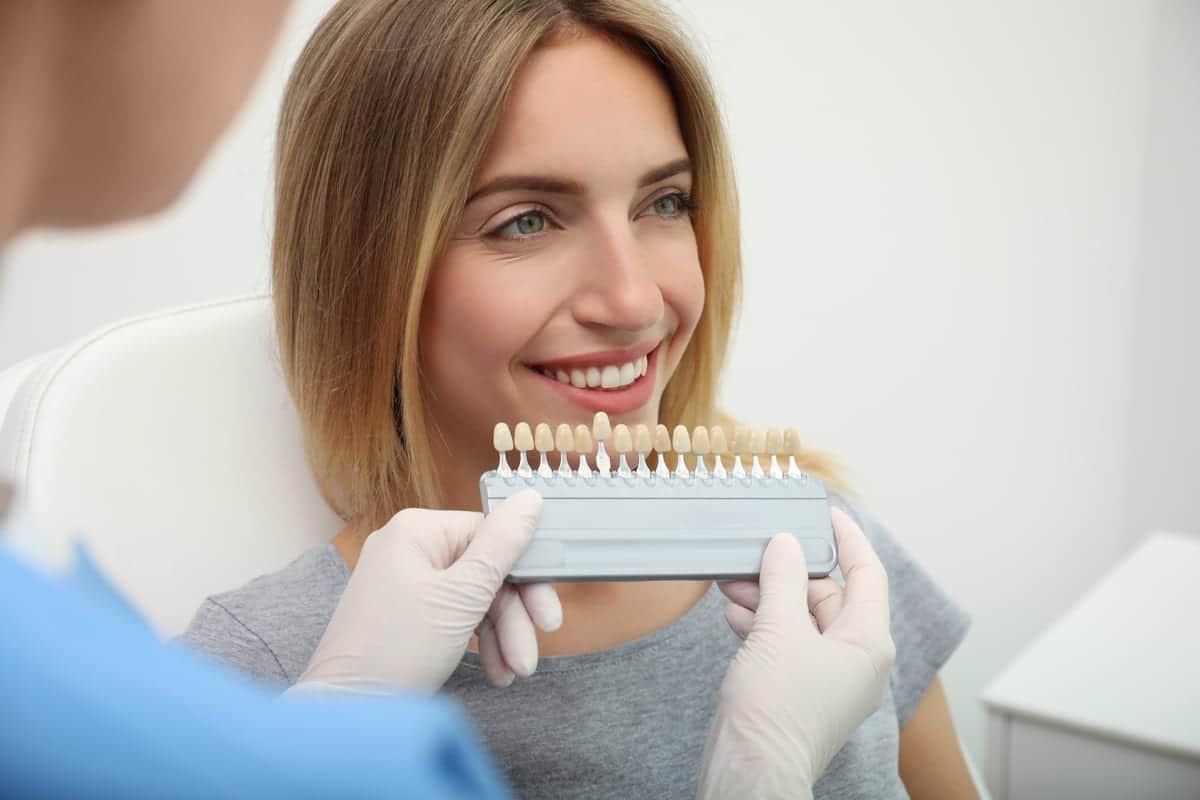
The VITA shade guide is a standard tool used in professional shade matching. It contains dozens of gradations from light to dark. Your dentist will find the combination that blends seamlessly with your surrounding teeth.
Patients in Timonium sometimes request the brightest white available. Dr. Whitecar will always give an honest assessment of what will look natural on your specific smile. A shade that is too white for your complexion will always look artificial — even if the craftsmanship is perfect.
- Shade is matched to your natural teeth and skin undertones
- Multiple gradations are tested in natural and artificial light
- The final choice accounts for age, gum color, and tooth shape
- Custom shading is communicated directly to the dental lab
The Role of Translucency in Realistic-Looking Veneers
Natural teeth are not solid white objects. They have a translucent quality that allows light to pass through the enamel layer. This gives teeth a lifelike depth that is hard to replicate — but modern veneers do exactly that.
High-quality porcelain veneers are designed with varying degrees of opacity. The edges of natural teeth are slightly see-through. A well-crafted veneer will reproduce that same incisal translucency at the biting edge.
This detail is what separates a beautiful veneer from one that looks like a chiclet. When light interacts with a translucent edge, it creates dimension. That dimension is what makes your smile look real — not like a row of tiles.
At West Towson Dental, we work with skilled dental labs that specialize in this level of customization. Every veneer is reviewed before placement to ensure it meets our standards for natural appearance.
What to Expect During Your Veneer Consultation and Fitting
The journey to natural-looking veneers begins with a thorough consultation. Dr. Whitecar will review your dental health, discuss your aesthetic goals, and take detailed impressions or digital scans. This information guides every decision that follows.
Before your permanent veneers are placed, you may receive temporary ones. Temporaries give you a preview of your new smile. They also allow Dr. Whitecar to make adjustments before the final restorations are fabricated.
It is worth noting that good overall dental health supports the best veneer outcomes. Issues like Gum Disease should be addressed before veneers are placed. Healthy gums frame your smile and help veneers look their best.
Similarly, any underlying dental concerns such as decay or the need for Root Canal Therapy must be resolved first. Veneers placed over unhealthy teeth will not hold up or look their best long-term.
- Comprehensive exam and digital imaging
- Shade selection and smile design discussion
- Tooth preparation and impression or digital scan
- Temporary veneers placed while lab fabricates final restorations
- Final fitting, bite check, and bonding appointment
Tips for Maintaining Your Natural-Looking Veneers
Veneers are durable, but they still require care. Brushing with a non-abrasive toothpaste helps preserve the surface finish. Abrasive whitening toothpastes can dull the polish over time.
Avoid biting hard objects like ice or fingernails. Veneers can chip under extreme pressure, just like natural teeth. If you grind your teeth at night, ask Dr. Whitecar about a custom night guard to protect your investment.
Regular cleanings and checkups at West Towson Dental keep your gums healthy and your veneers looking fresh. A clean, healthy smile always looks more natural than one that is neglected. Your six-month visits are just as important after veneers as before.
Conclusion: A Smile That Looks Like You
The fear that veneers will look fake or too white is completely understandable. But with modern materials, precise shade matching, and translucency techniques, today’s veneers are remarkably lifelike. Dr. Michael W. Whitecar is committed to creating results that enhance your natural appearance — not replace it. Timonium patients deserve a smile that feels authentic and confident every single day. Book Now to schedule your appointment with our team.
Frequently Asked Questions
Will my veneers look obviously fake to other people?
Not with modern materials and proper shade matching. Today’s porcelain veneers are designed to mimic the light-reflecting properties of natural enamel. When crafted and placed correctly, most people cannot tell you have veneers at all.
Can I choose how white my veneers will be?
Yes, you have input on shade selection. However, Dr. Whitecar will guide you toward a shade that complements your skin tone and surrounding teeth. A shade that is too bright for your complexion will always appear unnatural, even if it is technically perfect porcelain.
How long do veneers last before they need replacement?
With proper care, porcelain veneers typically last between 10 and 20 years. Regular dental visits, gentle brushing, and avoiding hard foods all extend veneer lifespan. Your dentist will monitor them at each checkup.
Do veneers work for all types of cosmetic concerns?
Veneers are highly versatile. They can address chips, cracks, discoloration, gaps, and minor misalignment. Dr. Whitecar will assess your specific concerns during a consultation and recommend the best approach for your smile goals.
Is the veneer process painful?
Most patients experience minimal discomfort. Local anesthesia is used during the tooth preparation phase. Some sensitivity after the procedure is normal but typically resolves within a few days.