In Pain? Emergency appointments welcome.


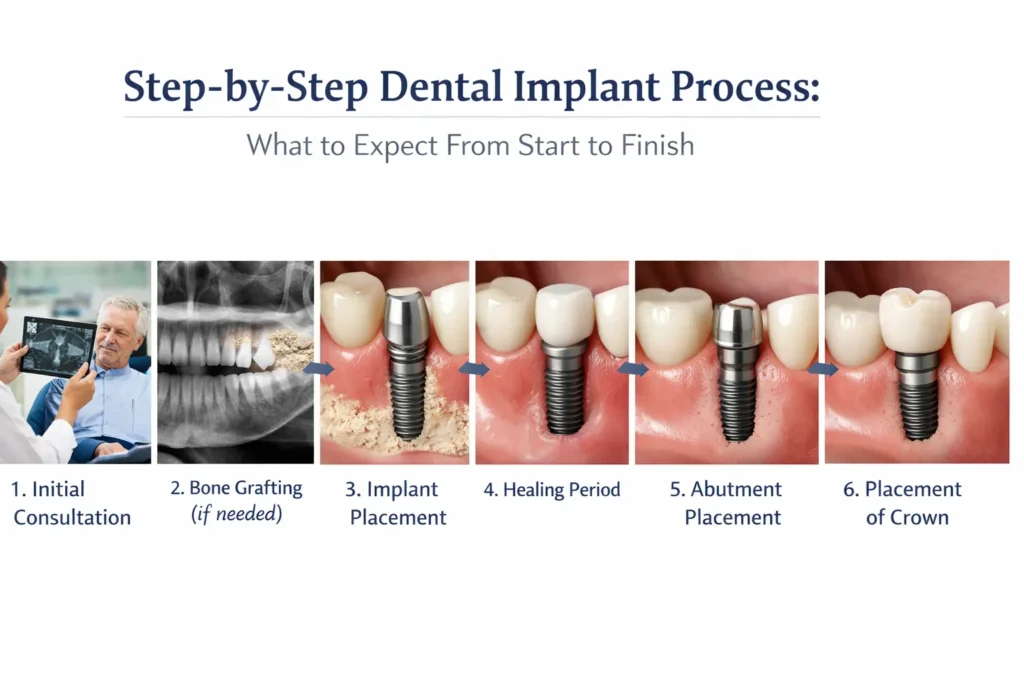
Step-by-Step Dental Implant Process: What to Expect From Start to Finish


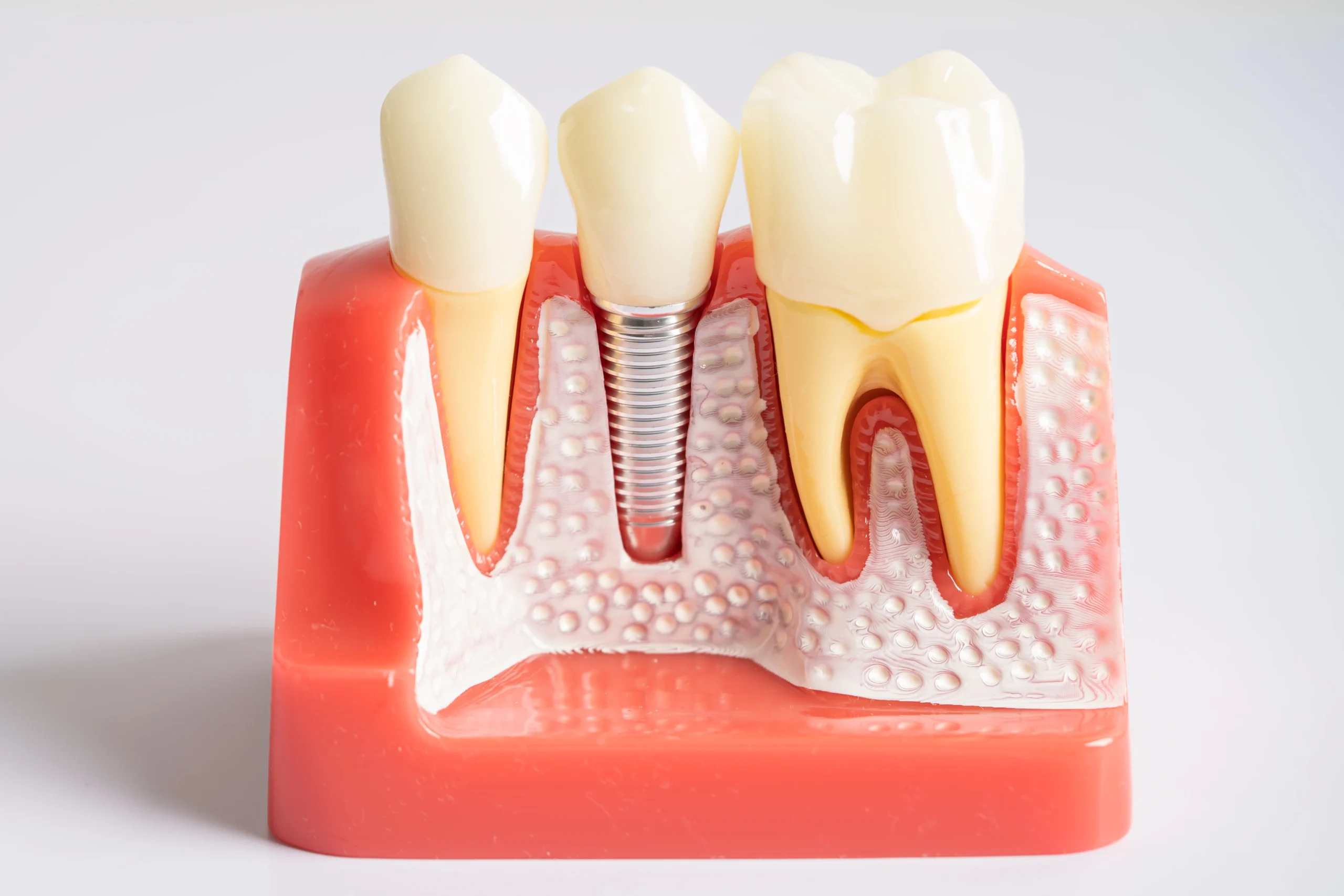
Dental implants are among the most reliable and long-lasting solutions, providing functional and aesthetic improvements to your smile. If you are considering dental implants in Towson, it can be helpful to know what each part of the process entails so that you can feel confident and ready for each step along the way.
The path to a renewed smile powered by tooth implants starts with an in-depth consultation and proceeds through multiple stages of design, placement, and healing. In this guide, we’ll take you through the progression step by step, offering some ideas of what to expect along the way.
Initial Consultation: Assessing Your Candidacy
The first visit is where your dentist will review their findings: assess your oral health, take x-rays, and discuss your reasons for undergoing the procedure. Depending on their gum health and bone density, for example, not everyone is a candidate for implants right now.
Additionally, your dentist will review your medical history to ensure you are healthy enough for the surgery. However, patients with pre-existing dental conditions or insufficient bone mass may need to undergo preliminary treatments, such as bone grafting or gum therapy, to become better candidates for the implant system.
Developing a Treatment Plan: Tailoring Your Implant Journey
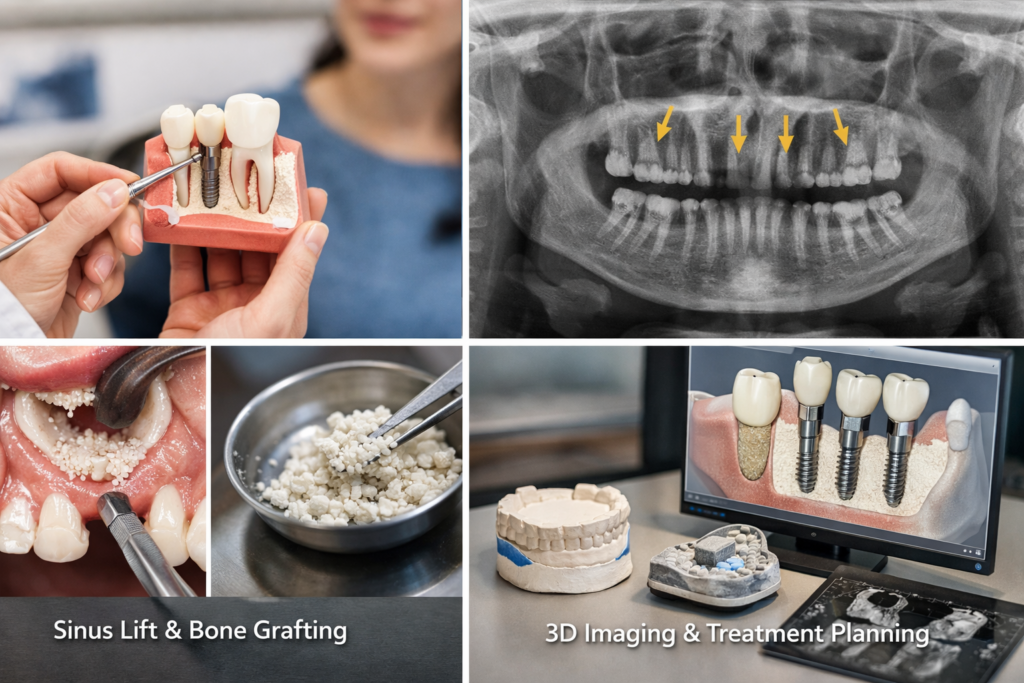
After you have been cleared for the procedure, you proceed to treatment planning. At this stage, individuals develop a personalized treatment plan to achieve optimal outcomes. Your implant dentist will explain the type of implant that is ideal for you and the number required.
Unfortunately, not all patients have enough bone to support dental implants in Towson without additional procedures, such as sinus lifts or bone grafts, to augment the area prior to implant placement. This step is important to ensure that, in the long term, your implants will integrate successfully with the jawbone. Your implants will be placed based on detailed impressions and imaging of your mouth, ensuring everything fits together perfectly for a successful result.
Implant Placement Surgery
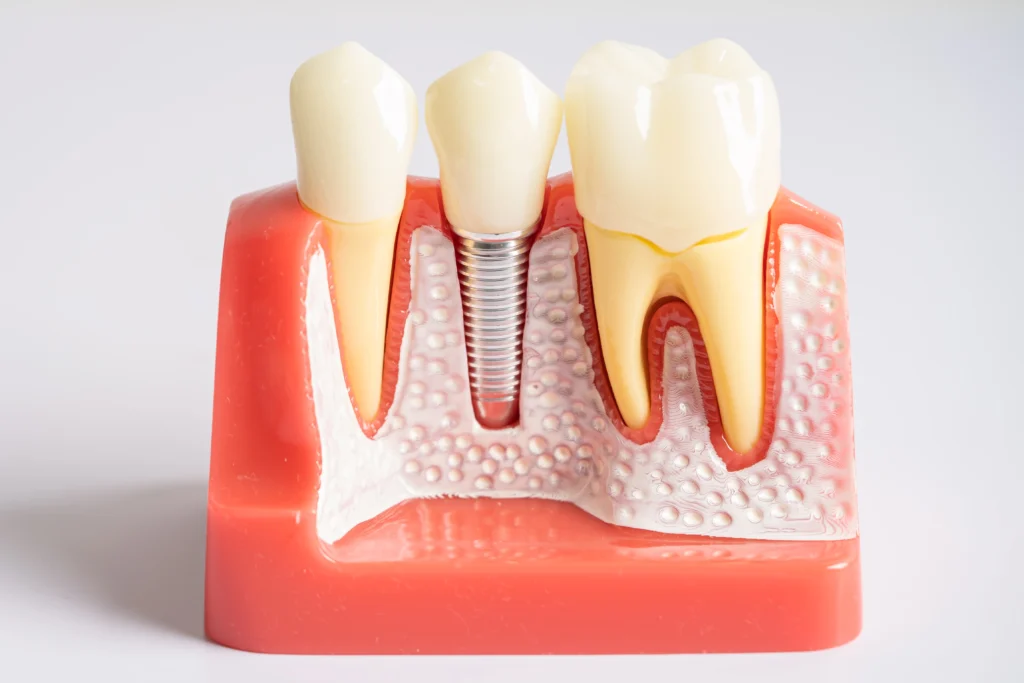
The main step in the process is surgically positioning the implants directly into your jawbone. At this step, your dentist will make a small incision in your gum to better access the bone. Then, titanium posts, which will function as the roots of the new teeth, will be inserted into the bone.
The procedure is performed using a local numbing technique to keep you comfortable during the surgery. Your dentist might also provide sedation options to help if you feel anxious. Although this is done on an outpatient basis, it can take several hours depending on how many implants are being placed.
After the implants have been inserted, your gums will be stitched up, and you’ll enter a healing phase. Following post-surgical instructions as closely as possible is crucial for limiting complications and speeding recovery. You will need to return for follow-up appointments, so your dentist can check how well you’re healing.
Osseointegration: Healing and Bonding Process
After the implant is placed, you will go through a process known as osseointegration. This is the stage during which the implant posts attach to the bone. It usually takes several months for the bone to grow around the posts and form a sturdy base for artificial teeth.
During this period, you may have a temporary restoration placed to keep your smile aesthetically pleasing and to allow you to talk and eat comfortably. That said, it is imperative not to place too much stress on the implants until they have integrated completely.
Abutment Placement
Once osseointegration has occurred, it’s time to place the abutment, a tiny connector that links your custom-crafted crown to the implant. The abutment is placed in a simple procedure your dentist will conduct, known as reopening the gum to expose the implant. Next, the abutment is placed on the implant post, and the gums are sewn around it.
Once the abutment is in place, you will need time to let the gums heal and settle around the abutment. This period of healing will be over in a couple of weeks, and the dentist will check in regularly to make sure everything is going alright.
The Final Restoration
The last stage in the dental implant process is the placement of custom crowns or some other prosthetic teeth. These crowns are built to resemble the color and shape of your natural teeth. You can smile, chew, and talk with confidence once all your final restorations are placed.
Then the dentist will ensure that your implants are comfortable and function properly. You might need a couple of visits after that to tweak them or verify that your bite is correct.
Are You A Good Candidate for Dental Implants?
If you are missing one or more teeth and want a long-lasting, natural-looking solution, you may be wondering, “Are dental implants right for you?” Endosseous implants can be used by individuals who have good oral hygiene and the jawbone density required for successful implant placement and retention.
It is also a good fit for an individual seeking a permanent solution for tooth loss. During your initial visits, your implant dentist will examine you in detail and analyse your health and specific needs to guide you through the process and decide whether implants are the right option for restoring a beautiful smile and improving oral function.
Dental Implants Aftercare and Maintenance
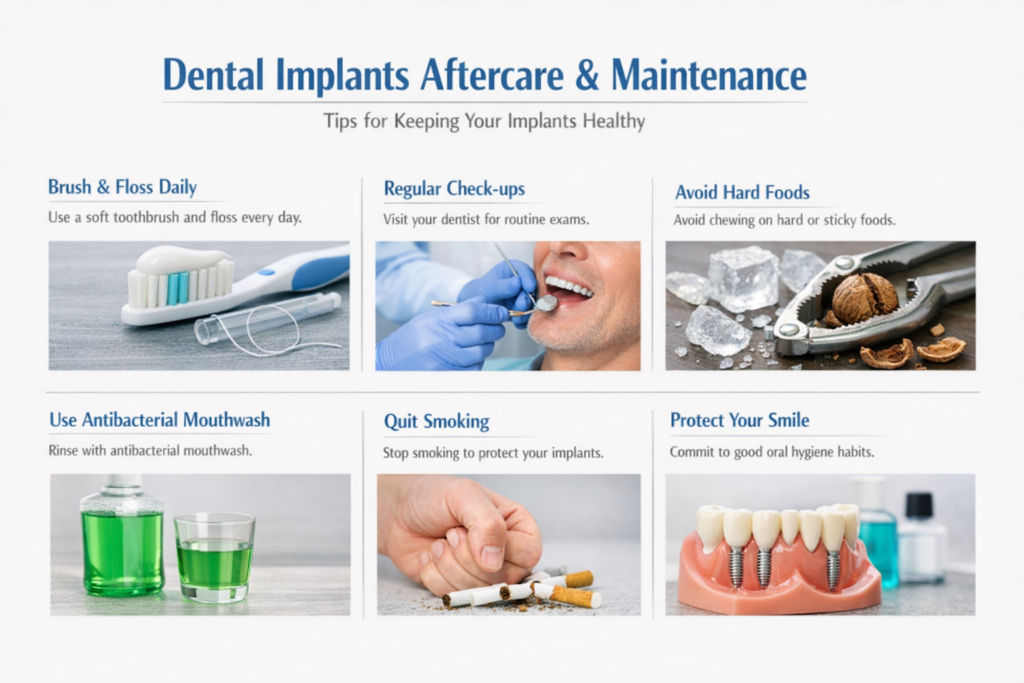
After your dental implants have been fully restored, good aftercare is necessary to facilitate their long-term success. Endosseous implants need regular care just like natural teeth to look and function perfectly. Here’s how to take care of your new smile:
- Brush and Floss Regularly: Use a soft-bristled toothbrush and non-abrasive toothpaste to keep both the implants and the surrounding gums clean; do this at least twice per day. You should floss every day to avoid plaque buildup around the implants.
- Keep Up with Regular Check-ups: Schedule routine visits with your implant dentist to monitor the health of your implants and the surrounding tissues. In a procedural sense, these visits will help catch potential problems at an early stage.
- Steer Clear of Hard Foods: Implants are strong, but if you have them in place, avoid anything too hard (like chewing ice) that could chip the implant or create excessive pressure on it.
- Antibacterial Mouthwash: Using an antibacterial mouthwash can help reduce plaque and bacterial buildup around your implants and gums. This will help maintain your oral hygiene.
- Stop Smoking: Smoking will interfere with the healing process and increase your risk for complications. If you do smoke, you may also want to make an aggressive effort to quit if you plan on keeping your implants for a long time.
Adhering to these aftercare practices can ensure your endosseous implants remain healthy and continue to serve you well for many years.
Your New Smile Awaits
Tooth loss can feel overwhelming, but tooth implants offer a permanent solution and are often a great option if you’re looking for something long-lasting! Multiple steps are involved in this process, and each step is designed to ensure your new smile is comfortable, functional, and aesthetically pleasing.
At West Towson Dental, we love restoring our patients’ smiles with natural-looking dental implants. If you have questions or have already made up your mind, contact us today to schedule a consultation! Our professional team will assist you at every step of the process, and you can rest assured that we will also ensure you are comfortable at every stage.
Questions People Ask About Dental Implants
What are dental implants?
Dental implants are titanium posts surgically placed into the jawbone to replace missing teeth. They serve as artificial tooth roots, supporting crowns, bridges, or dentures and providing a natural-looking, functional solution to restore your smile.
How long does the dental implant process take?
The dental implant process usually takes several months to a year, depending on factors like healing time and any additional procedures (e.g., bone grafting). After the implant is placed, the bone needs time to fuse with the post.
Are dental implants painful?
While discomfort is normal after the procedure, pain is typically minimal and well-managed with numbing methods or sedation. Most patients experience only mild soreness during recovery, which can be alleviated with prescribed pain medication and proper aftercare.
What is osseointegration, and why is it important?
Osseointegration is the process by which the titanium implant fuses with the jawbone, creating a stable foundation for the artificial tooth. It’s crucial for the implant’s success, ensuring durability and a natural feel for your new tooth.
Can anyone get dental implants?
Most people are candidates for dental implants, but factors like age, bone density, and overall health can affect eligibility. Your dentist will evaluate your health and jawbone condition to determine if implants are right for you.
How long do dental implants last?
With proper care, dental implants can last 20 years or more. Regular brushing, flossing, and check-ups, combined with a healthy lifestyle, can help ensure the longevity of your implants, providing you with a long-lasting solution.